

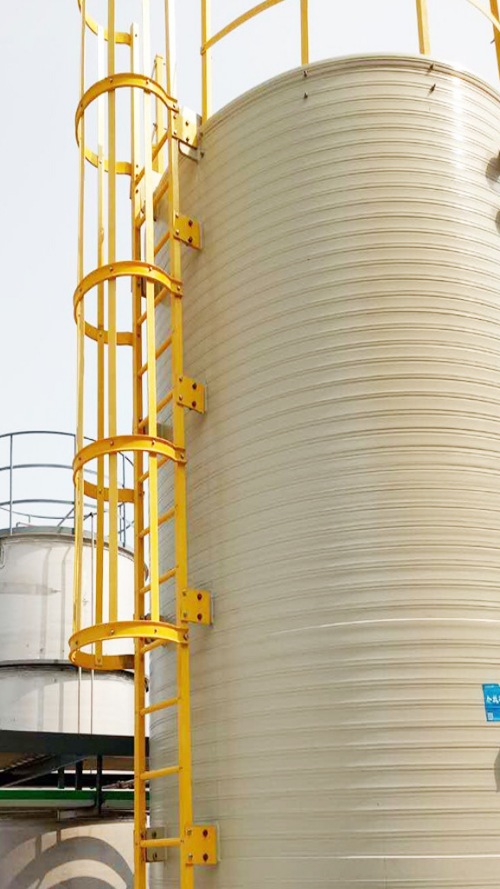
Choosing the right steel ladder requires considering three core dimensions: usage scenario, safety standards, and material performance. The selection process should be tailored to specific needs, with the following steps:
- Define the usage scenario and requirements: For industrial plants/equipment maintenance, prioritize fixed steel straight/inclined ladders with safety cages and anti-slip footplates. For construction work or temporary height access, portable steel ladders are preferable, emphasizing lightweight design and ease of assembly/disassembly. For high-altitude operations such as rooftops and storage tanks, choose platform-type fixed ladder that meet load-bearing requirements and ensure a secure connection to the foundation structure.
- Verify material and corrosion resistance: For dry indoor environments, Q235B carbon steel is a cost-effective option. For humid, coastal, or corrosive outdoor environments, prioritize stainless steel or hot-dip galvanized carbon steel ladders to improve rust resistance and lifespan.
- Adhere to Safety Standards and Load-Bearing Parameters.The rated load-bearing capacity of fixed ladder must be confirmed (general industrial models ≥ 300kg). The steps must have anti-slip textures. Straight ladders exceeding 2m in height must be equipped with a safety cage, and the guardrail height must be no less than 1.05m. It must also comply with national standards such as 15J401 “Steel Ladders”.
- Match Installation to Space Conditions
Straight ladders are suitable for narrow spaces, while inclined ladders with a gentler slope can be used in spacious areas. The installation method must be combined with the site structure. Concrete foundations are suitable for pre-embedded parts welding, while steel structure workshops are suitable for bolt connections, ensuring a firm and stable installation without shaking.